Writer’s Workshop Ideas- Fun, Engaging

A colleague in my K- 5 school asked for a few ideas about making writer’s workshop fun and engaging.  I love those questions because it allows me to be creative and gather ideas.  Here are a few ideas to get started… (If you have more please add them!)

  • Be passionate- write in front of the students and let them see you write and talk out loud about your process, about spelling, …
  • Draw pictures to go with the writing
  • Write stories to go with the pictures
  • Make comic books
  • Re-write comic books (the one you just made or one that was professionally made) into story format with dialogue and description
  • Let students write what they want- lists, stories, opinions, how-to, all I know about…, non-fiction or fiction, poems, … play with words
  • Find a real audience- another classroom, the hallway, a classroom in another school or another city, country, a blog, …
  • Design/ diagram something invented and explain how it works
  • Read/ tell the beginning of a story and have the students continue/ finish it
  • Act out a story and then have the students write the script
  • Write a script and then have the students act it out, or with puppets, or as a podcast or …
  • Writing prompts
  • Connect writing closely with reading or science or social studies
  • Shared writing
  • Do you have a class mascot (stuffed animal, live animal, …)?  Write the stories of the mascot- where from, past adventures, include pictures,
  • Class blog on kidblog.org
  • Add podcasts of students reading their writing on your page of the school’s website
  • Check out blog posts such as: http://tunstalltimes.blogspot.com/2014/08/engaging-writing-activities.html
  • Stick with the standards but let your mind wander and your creativity soar

Differentiated Instruction

Yes!  Differentiated instruction is important.  Students need the opportunity to learn and show their learning in ways that are appropriate and motivating for them.

For a humorous take on differentiated instruction, watch this video:

Welcome MTSS!

Today the vertical team, the multi-tiered system of support, is visiting our school.  This is a great opportunity to get feedback on what we are doing well and where we need to improve.  Specialists  in areas of literacy, math, behavior, special ed., ESL, pre-K and kindergarten, … come to spend the day to see what/ how we are doing.

Some of the teachers and staff may get nervous when there are visitors.  Me?  I like feedback… especially when it is professional and leads toward growth.

Thumb Challenge!

At La Cosecha I learned a new vocabulary-practice strategy: Thumb Challenge!

pic03925

Create a game board for each pair of students.  The example in the picture used two crowns from Burger King (sorry about the glare).  Along each side have the same set of vocabulary words and the word start. You could attach the words with tape, velcro, sticky notes. Then:

  • Have each pair of students sit knee-to-knee;
  • Place their thumbs at the starting line;
  • Partner A moves his/ her thumb to the first word and challenges partner B to define the word and use it in a sentence;
  • If partner B is correct, partner A asks about the next word; if not partner B asks partner A about the first word;
  • If neither partner can define/ use the word they need to get assistance.

Options: Use a third person to serve as the judge, deciding if the definition and usage are correct. Let students use notebooks and environmental print to aid them

Consequence Wheel

Here is a fun, new graphic organizer:  The Consequence Wheel/ Ripple Effect.

Consequence Wheel

  • Put the topic in the middle;
  • Add the consequences in the first ring;
  • Add the details, both positive and negative in the next ring.

Use this to help students see consequences of events, understand cause and effect, …  Try it and see if it works for you

Differentiated Writing Instruction

When teaching writing in elementary and middle school, one of the challenges is how to keep moving forward with the different genre studies (narrative, expository and opinion … and don’t forget poetry!) while giving students the differentiated instruction that they need.  At La Cosecha I learned of a way to do just that.

Using the units proposed by Lucy Calkins or the units created by your district (or by you) the first step is to begin each unit using a simple prompt that will let you complete a pre-assessment to find out what the students already know.  You can assess their writing using the rubric to guide your instruction during the unit.  My experience has been, though, that those first drafts show too many holes to be of much use; the students need instruction in many areas.

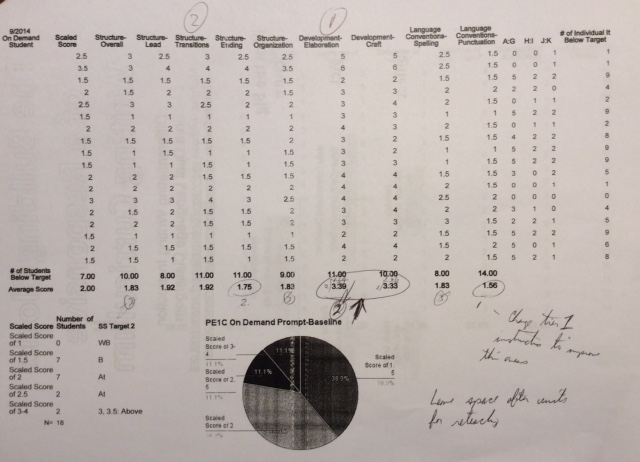
pic26633Then, after teaching the unit while referring often to the rubric and publishing a final draft, use the same prompt you used at the beginning of the unit.  This time, it is important to use the rubric to deeply analyze the writing.  The first thing you will most likely notice is a vast improvement over the initial use of the prompt.  However, if you use the rubric and turn the information into numbers (see image to the right) you will see trends including areas that need specific attention.

This is where the differentiation can happen.  Based on the needs you notice, you can form groups of students for differentiated instruction just as you would do during reader’s workshop.  This small group work could happen during the first week of the next unit or you could schedule a week in between each unit for the differentiated instruction.  Use the CCSS to decide which areas are of greatest need.  You might also decide that a change in tier 1 instruction would be most appropriate (e.g. focus on punctuation during morning meeting).  You can let this assessment guide you during the next unit of study.

One more idea that I loved: sketch the story then touch and tell.  Oral rehearsal!

Resources: Lucy Calkins: Writing Pathways, WIDA Writing Rubric


Biliteracy

BiliteracyI learned of two texts at La Cosecha 2014 that can help us teach for biliteracy.  Biliteracy is one of the three goals of dual language education: students who are bilingual, biliterate and bicultural.  I will add them to my wish list!  Click on the image for more information.


Words in Motion

I heard of a new (for me) resource while at La Cosecha 2104: Words in Motion.

Words in Motion is a cognate-based curriculum that introduces academic vocabulary in meaningful contexts and promotes strategies for academic vocabulary acquisition.

“The full curriculum consists of seven units that include lesson plans, teacher materials, and student worksheets for each day. The materials are organized first by unit; within each unit they are organized by day; and within each day they are organized into lesson plans, student materials, and teacher materials. In many cases, there are separate materials for the monolingual and crosslinguistic versions of the curriculum, as well as Spanish translations of the crosslinguistic versions to support the delivery of the bilingual version. The VIAS team is pleased to provide these files for use by educators.” (from the CAL website:  http://www.cal.org/vias/subproject4/wmc/index.html )

This could be used by classroom teachers and/ or ESL teachers to help students acquire academic vocabulary.  Check it out!

Visit to El Camino Real Academy, Santa Fe, NM (La Cosecha 2014)

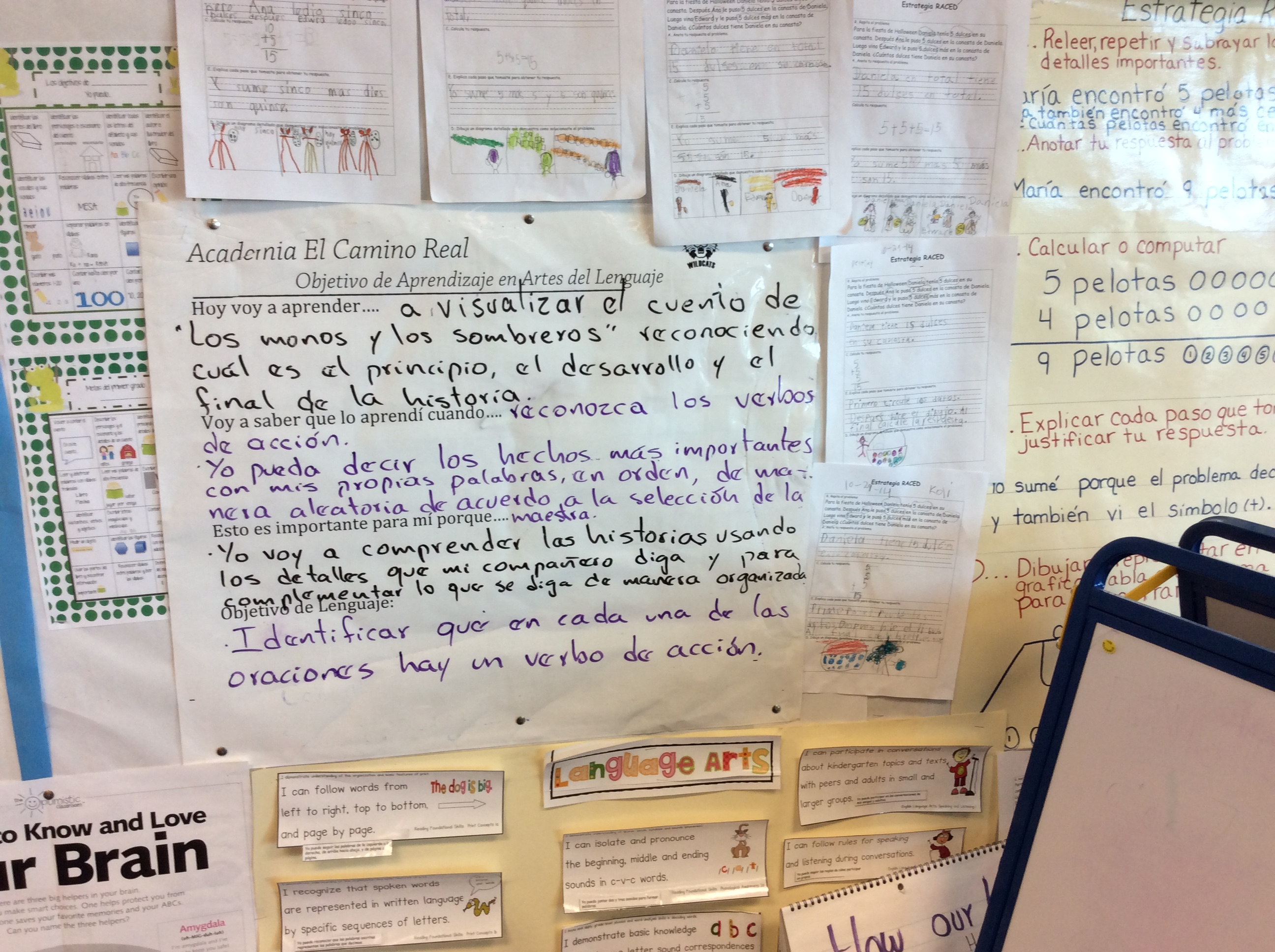
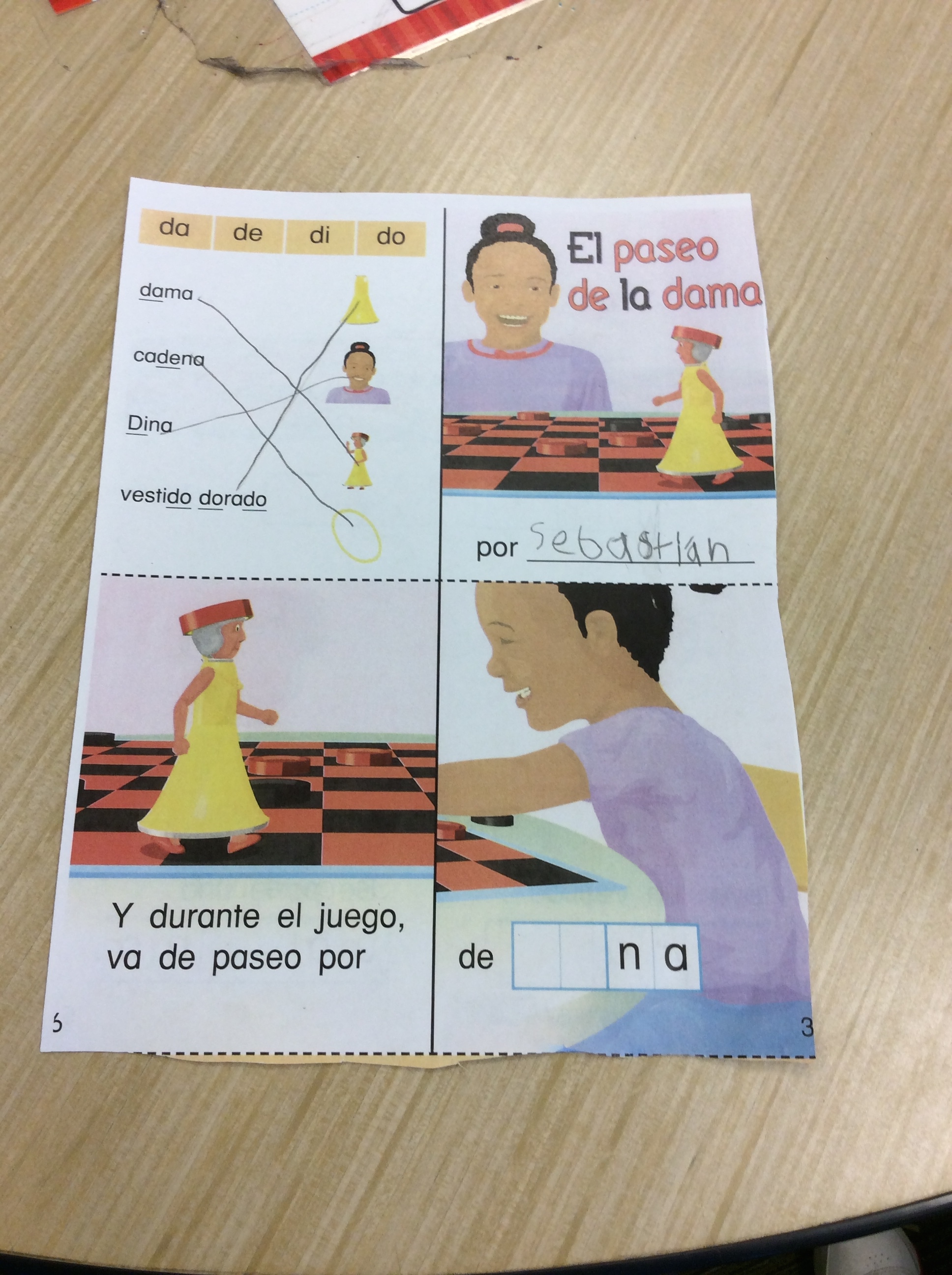
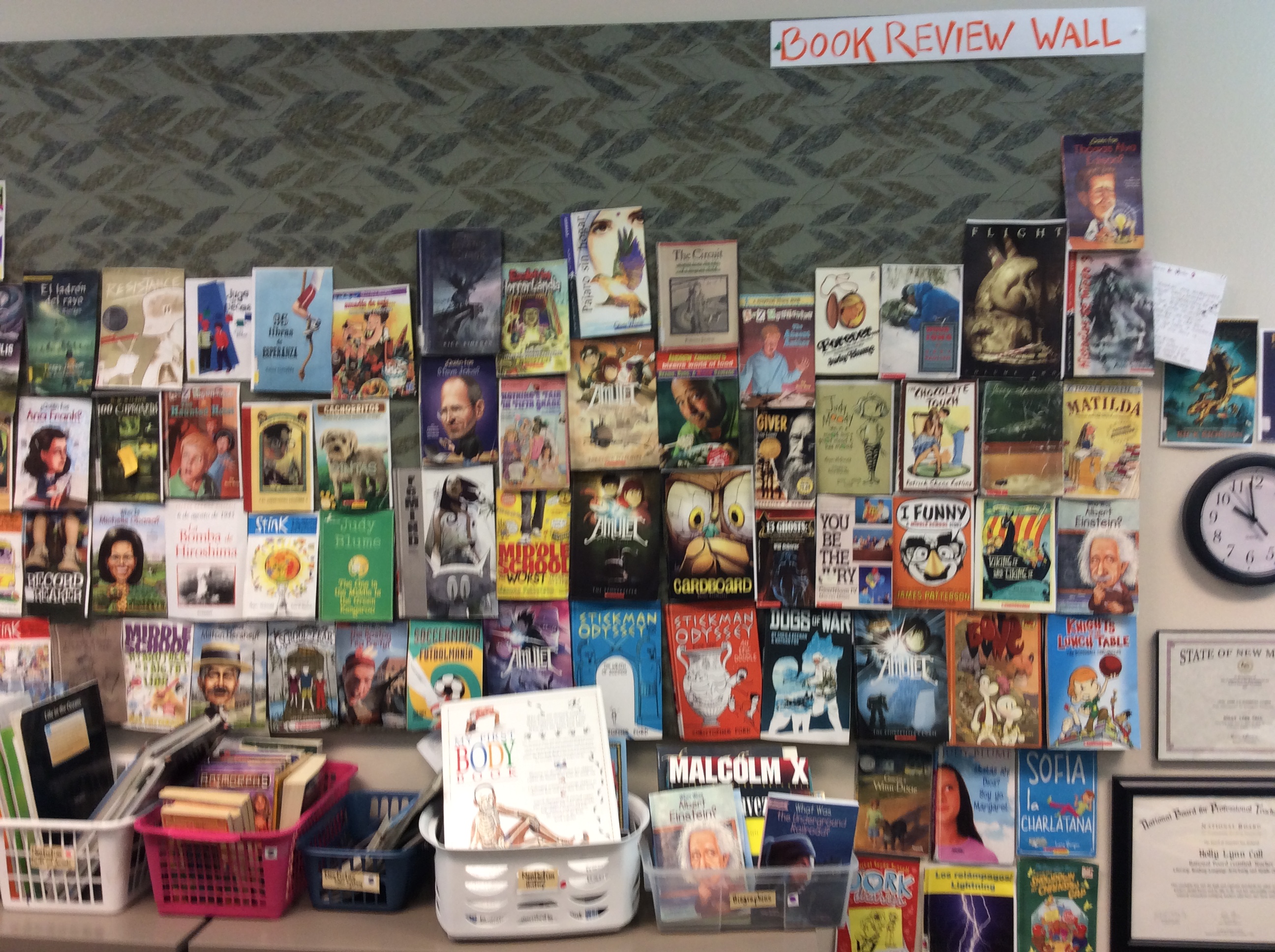
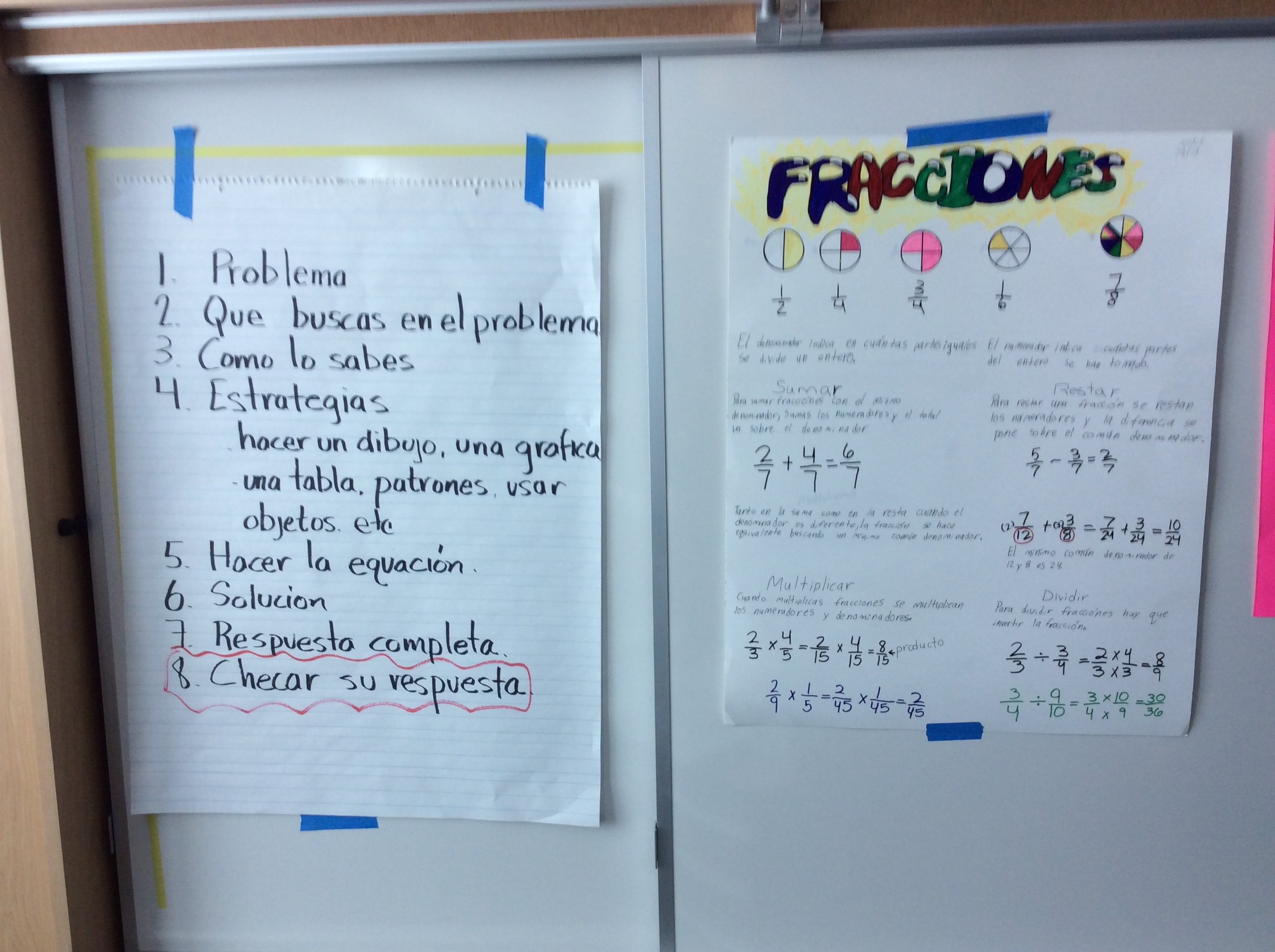
We had a wonderful visit today to El Camino Real Academy in Santa Fe, NM as part of La Cosecha 2014.  Here are some pictures of artifacts that I saw.  The first 8 are from Kindergarten and 1st grade; the others are from 6th and 7th grade.

IMG_0113 IMG_0112 IMG_0109 IMG_0108 IMG_0107 IMG_0106 IMG_0105 IMG_0104


IMG_0103 IMG_0102 IMG_0100

Centros de aprendizaje (lectura)

Algunas ideas para centros de aprendizaje:
(se puede añadir ideas, cambiar ideas, juntar ideas, …)

Es importante enseñar y practicar cada centro de aprendizaje antes de que los estudiantes lo hagan solitos.

Formando palabras
Usando las sílabas que han aprendido, estudiantes forman palabras juntando papelitos que tienen las sílabas escritas. Durante su tiempo en el grupo tienen que formar 10 palabras reales, escribir las en un papel o en su cuaderno y dibujar tres; pueden añadir 5 no-palabras (sílabas que han juntado que pueden decir pero que no son palabras reales: “me-pe”).

Escuchar y contar
Estudiantes escuchan/ leen un cuento. Después, tienen que contar el cuento usando las frases, “Al principio…, Después… y Al final… .” Pueden usar títeres si son disponibles.

¡PUF veloz!
Usando un cronómetro, estudiantes repasan las palabras de uso frecuente que han aprendido para ver si pueden decirlas cada vez más rápido. Uno compite contra uno mismo, no contra otros estudiantes. Pueden escribir su tiempo y/o las palabras que no sabían en una hoja o en su cuaderno.

Rimas
Estudiantes elijen una palabra de un montoncito y tiene que decir y escribir 5 palabras que riman; la meta es que 4 de los 5 sean palabras reales. Después tienen que marcar las palabra que no es una palabra real. Añade un cronómetro para otro desafío.

Leyendo con pareja
Estudiantes leen un libro juntos alternando:
Una página cada uno;
Una oración cada uno;
Una palabra cada uno.
Después cuentan el cuento o dibujan su parte favorita.

Los libros de la maestra
En este centro los estudiantes re-leen los textos que la maestra ha leído en lecciones de lectura compartida, rimas que han estudiado, canciones que han aprendido… cualquier texto que la maestra ha leído con el grupo (“Big books,” “charts,”…)