Differentiated Writing Instruction

When teaching writing in elementary and middle school, one of the challenges is how to keep moving forward with the different genre studies (narrative, expository and opinion … and don’t forget poetry!) while giving students the differentiated instruction that they need.  At La Cosecha I learned of a way to do just that.

Using the units proposed by Lucy Calkins or the units created by your district (or by you) the first step is to begin each unit using a simple prompt that will let you complete a pre-assessment to find out what the students already know.  You can assess their writing using the rubric to guide your instruction during the unit.  My experience has been, though, that those first drafts show too many holes to be of much use; the students need instruction in many areas.
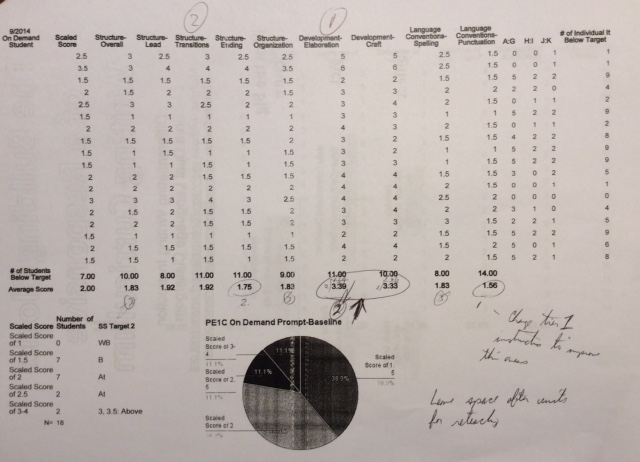
pic26633Then, after teaching the unit while referring often to the rubric and publishing a final draft, use the same prompt you used at the beginning of the unit.  This time, it is important to use the rubric to deeply analyze the writing.  The first thing you will most likely notice is a vast improvement over the initial use of the prompt.  However, if you use the rubric and turn the information into numbers (see image to the right) you will see trends including areas that need specific attention.

This is where the differentiation can happen.  Based on the needs you notice, you can form groups of students for differentiated instruction just as you would do during reader’s workshop.  This small group work could happen during the first week of the next unit or you could schedule a week in between each unit for the differentiated instruction.  Use the CCSS to decide which areas are of greatest need.  You might also decide that a change in tier 1 instruction would be most appropriate (e.g. focus on punctuation during morning meeting).  You can let this assessment guide you during the next unit of study.

One more idea that I loved: sketch the story then touch and tell.  Oral rehearsal!

Resources: Lucy Calkins: Writing Pathways, WIDA Writing Rubric
 

Words in Motion

I heard of a new (for me) resource while at La Cosecha 2104: Words in Motion.

Words in Motion is a cognate-based curriculum that introduces academic vocabulary in meaningful contexts and promotes strategies for academic vocabulary acquisition.

“The full curriculum consists of seven units that include lesson plans, teacher materials, and student worksheets for each day. The materials are organized first by unit; within each unit they are organized by day; and within each day they are organized into lesson plans, student materials, and teacher materials. In many cases, there are separate materials for the monolingual and crosslinguistic versions of the curriculum, as well as Spanish translations of the crosslinguistic versions to support the delivery of the bilingual version. The VIAS team is pleased to provide these files for use by educators.” (from the CAL website:  http://www.cal.org/vias/subproject4/wmc/index.html )

This could be used by classroom teachers and/ or ESL teachers to help students acquire academic vocabulary.  Check it out!

Writing in English/ Escribiendo en español

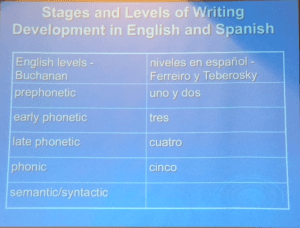
Stages NivelesAt La Cosecha 2014 I attended a session by Freeman and Freeman.  Loved it! Here is a copy of their handout that I downloaded from the conference website: Writing handout- Freeman.

The presentation was a summary of part of the text, Teaching Reading and Writing in Spanish and English which is also available in Spanish.  Looking at the writing children do while knowing the stages teachers can admire the amazing work that students do while coaching them on to the next level.

A few highlights:

  • Drawing is the starting of writing;
  • Student scribbles mirror the environmental print they see around themselves;
  • As very beginning writers, students may use the letters in their name, perhaps the only letters they know at first, to represent all letters;
  • In English students learn consonant sounds first- in Spanish they learn vowels;
  • As students work out consistency they may spell the same word in many different ways in the same sentence or paragraph;
  • All students can be accepted where they are and coached to higher stages.

As a teacher, I love coaching writers because it involves all four modalities of language- speaking, listening, reading and writing.  Students tell their story (or information), they write it, they read it back while listening to their work.  Then they revise.

Visit to El Camino Real Academy, Santa Fe, NM (La Cosecha 2014)

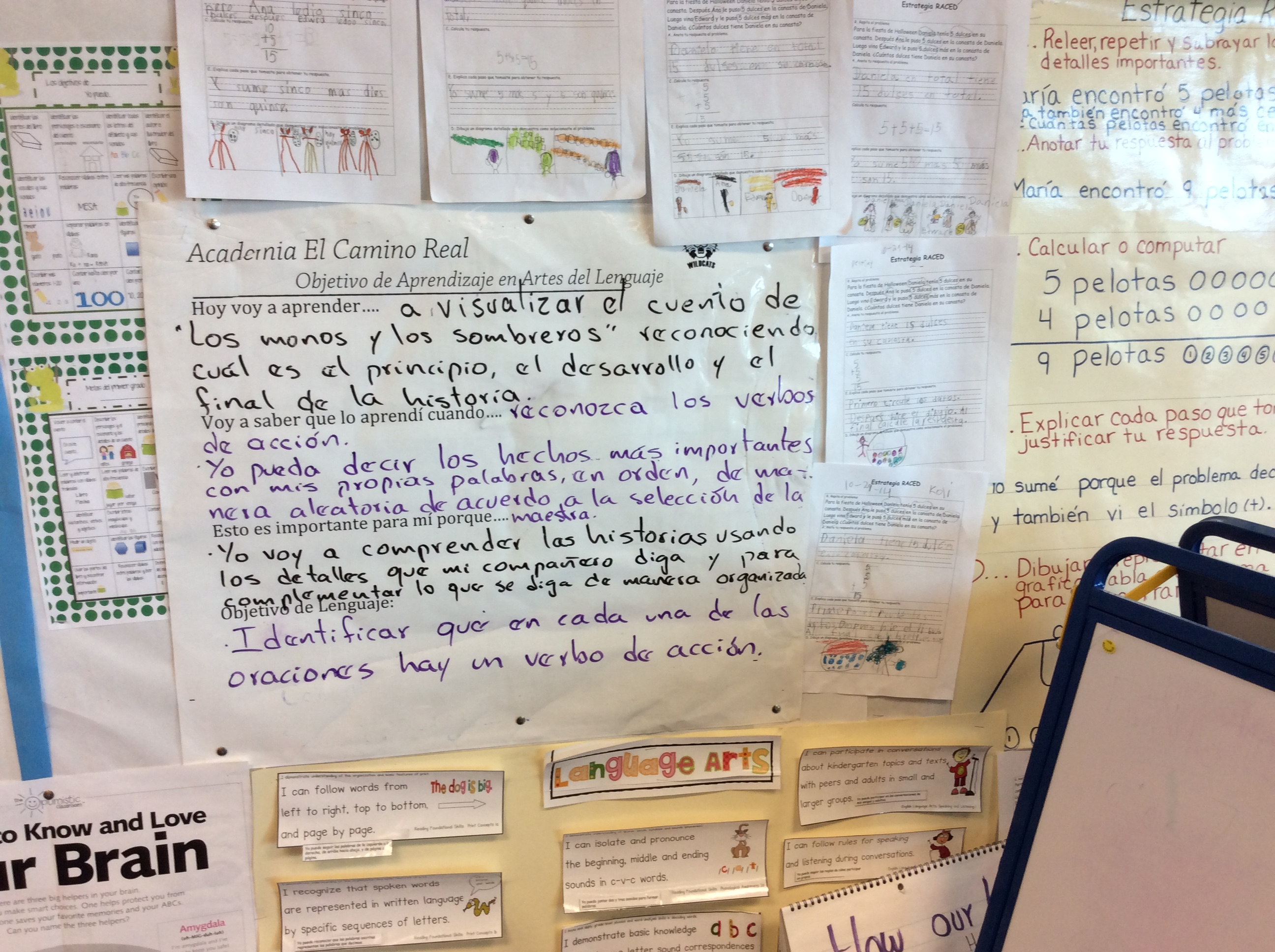
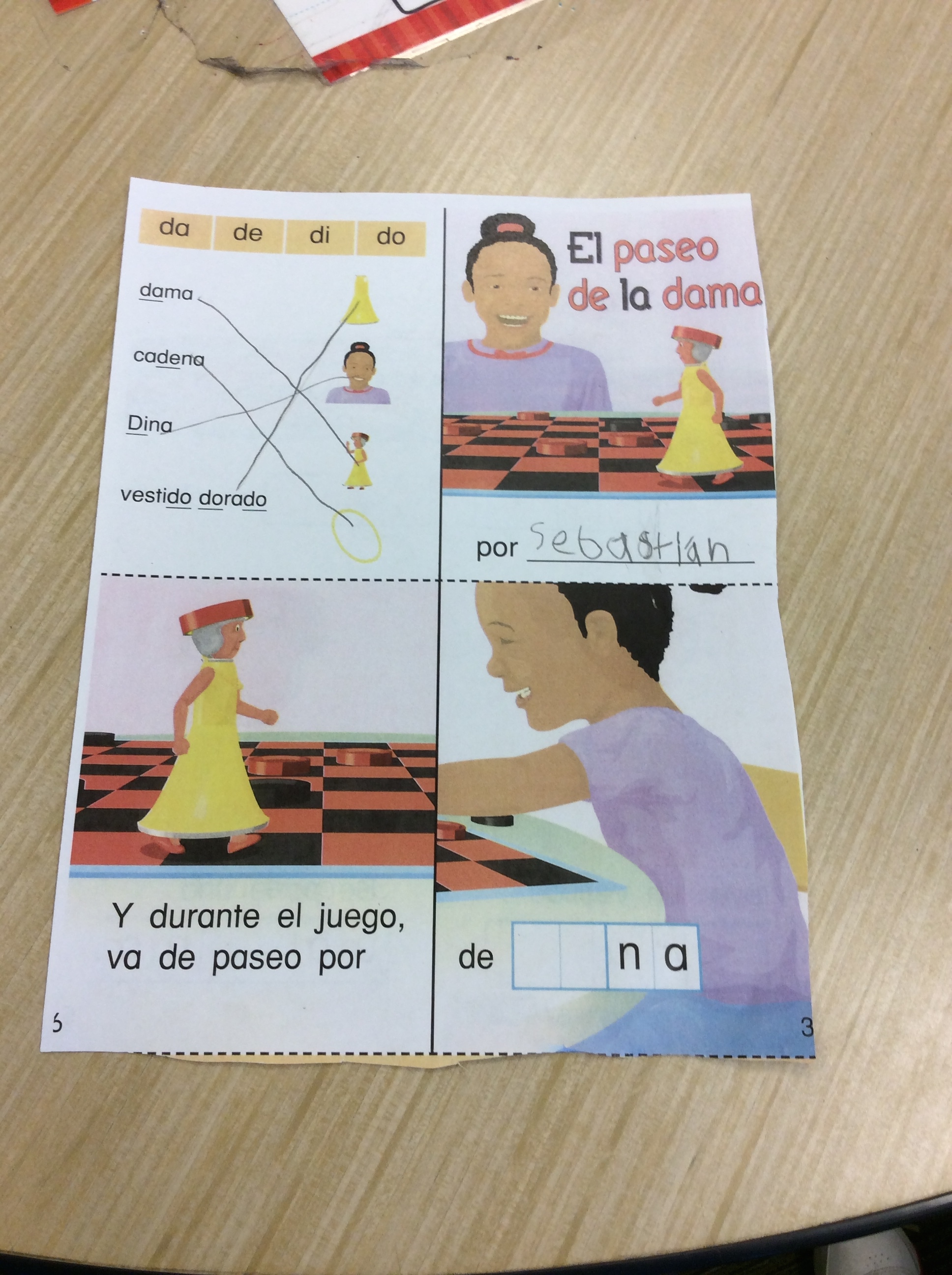
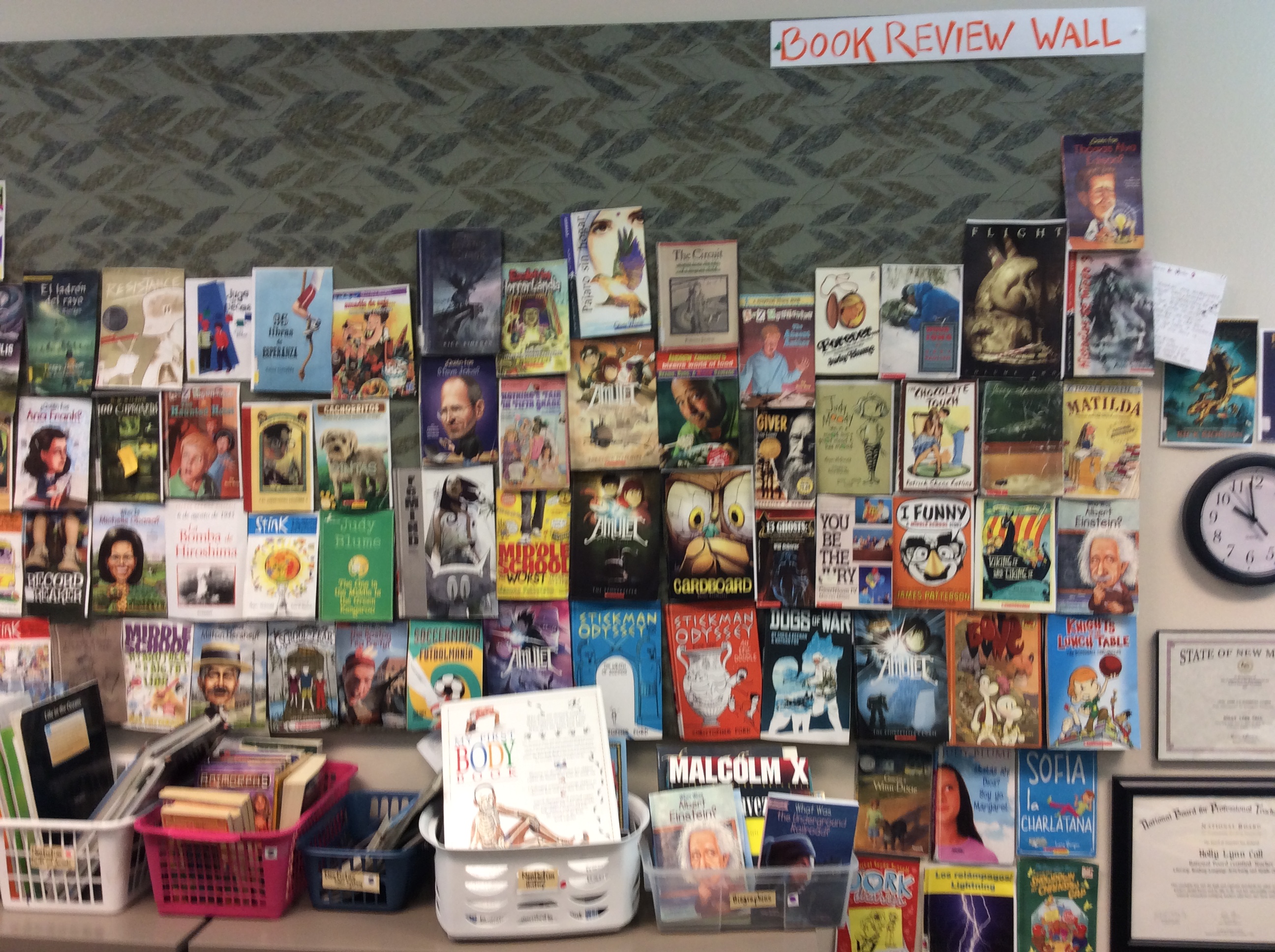
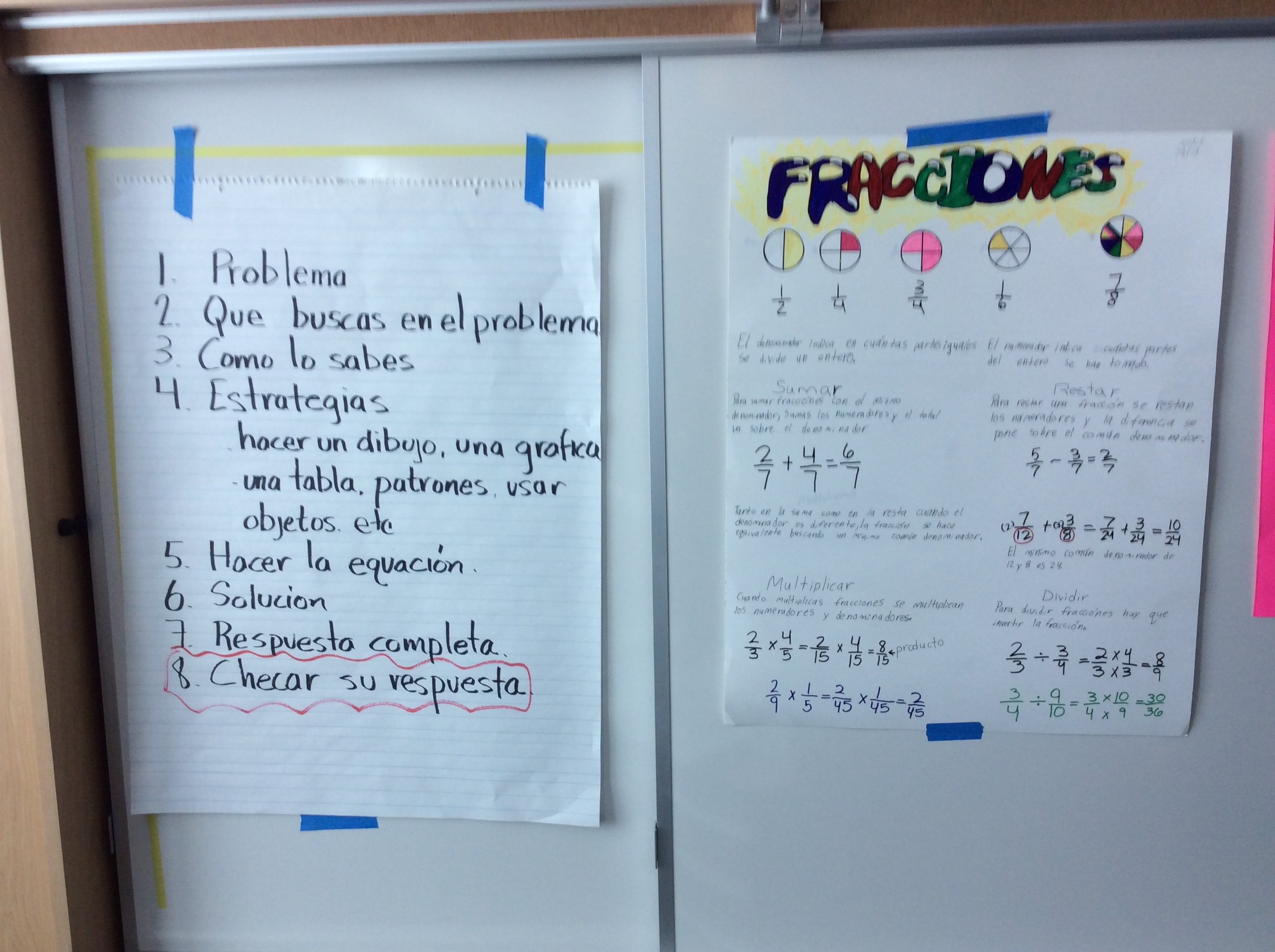
We had a wonderful visit today to El Camino Real Academy in Santa Fe, NM as part of La Cosecha 2014.  Here are some pictures of artifacts that I saw.  The first 8 are from Kindergarten and 1st grade; the others are from 6th and 7th grade.

IMG_0113 IMG_0112 IMG_0109 IMG_0108 IMG_0107 IMG_0106 IMG_0105 IMG_0104


IMG_0103 IMG_0102 IMG_0100

The Basics

I have been volunteering at a wonderful school in Lima, Peru and am reminded of some universal basics in education:

  • Have an objective;
  • Teach to the objective- use a text, activity, … to teach the objective remembering that the text is not the objective;
  • Evaluate whether or not the objective was met;
  • Reteach or move forward depending on the assessment.

When teaching I need to let the students do the work- talk, write, create, use the information- so they can show what they know and are able to do.  I love the workshop model where I give some input for no more than 15 minutes and then have the students use the information.  Then, I can provide more input.  Build up scaffolding and then remove it when it is no longer necessary.

I also like to backwards plan my units where I decide what I want the students to know and be able to do by what date.  Then, I backwards plan the lessons necessary to get them there.  And of course, relationships are key.

¡Feliz día del maestro amigos peruanos!  Happy Teacher’s Day to my Peruvian friends!

Making Content Accessible

All teachers who have Emerging Bilinguals (a.k.a ESL students) in their classrooms are immersion teachers.  That is, their students are immersed in English when that is not one of the languages the students know.

Often I am asked, “How do I change my instruction to make the content accessible to my emerging bilinguals?”  Below I have begun a list of ideas (most are not mine

Instructional Practices to Make Content Accessible

  • Use a variety of techniques responding to different learning styles and language proficiency levels.
  • Build and maintain positive interactions between teachers and students and among students.
  • Implement a reciprocal interaction model of teaching – genuine dialog.

Cooperative learning or group work situations, including…

  • Students work interdependently on tasks with common objectives.
  • Individual accountability, social equity in groups and classroom- everyone can do something.  (Have you seen the WIDA Can-Do descriptors?)
  • Extensive interactions among students to develop bilingualism.

Language input that…

  • Uses sheltering strategies to promote comprehension (see below)
  • Uses visual aids and modeling instruction, allowing students to negotiate meaning
  • Is interesting, relevant, of sufficient quantity
  • Is challenging to promote high levels of language proficiency and critical thinking
  • Language objectives are integrated into curriculum, including:
    • Structured tasks and unstructured opportunities for students to use language
    • Language policy to encourage students to use instructional language
    • Monolingual lesson delivery by the teacher
    • Students’ use of their L1 as needed to make meaning
    • Needs of all students are balanced
    • Students are integrated for the majority of the instruction

In the early stages of second language acquisition, input is made more comprehensible though the use of:

  • slower, more expanded, simplified, and repetitive speech oriented to the “here and now” (Krashen, 1981; Long, 1980),
  • highly contextualized language and gestures (Long, 1980; Saville-Troike, 1987),
  • comprehension and confirmation checks (Long, 1980), and,
  • communication structured to provide scaffolding for the negotiation of meaning by L2 students by constraining possible interpretations of sequence, role, and intent (SavilleTroike, 1987).

Sheltered techniques include:

  • the use of visual aids such as pictures, charts, graphs, and semantic mapping,
  • modeling of instruction, allowing students to negotiate meaning and make connections between course content and prior knowledge,
  • allowing students to act as mediators and facilitators,
  • the use of alternative assessments to check comprehension,
  • portfolios,
  • use of comprehensible input, scaffolding, and supplemental materials, and
  • a wide range of presentation strategies.

Language Acquisition

How do children acquire language?  Lots of language, written language, spoken language?

Dr. Kate Kinsella gave an interesting talk last year at the Minnesota ESL, Bilingual and Migrant Education Conference.  Here is the link to her page from the conference.  Check out the handouts for some amazing ideas for language acquisition:  http://www.mnellconference.org/?page_id=9