On banned books

Thrilled was I to read in the Star Tribune (Minneapolis, MN) about the failed effort to ban a book, Eleanor and Park.  Books should not be banned.  Period.

Yes, there are difficult themes in books.  But there are difficult themes in life.  Yes, there are offensive themes in books.  But there are offensive themes in life.  In the hands of a skilled educator, a reflective parent, any book can be a source of learning; it can lead to discussion and consideration of life and what kind of world we want to live in and create, just by our living.

Read.  And read lots!

Transition Words in Spanish

When writing realistic fiction (I teaching in 4th grade) there are ways to make your paragraphs flow more smoothly from one to the next.  One way is to use transition words.  I found and added to a list of transition words (palabras de transición).

Try them out in your Spanish writing and see how your paragraphs flow

Here they are:

Para demostrar secuencia

al principio                   luego                        antes       después                         en seguida

Para demostrar contraste o cambio de idea:

por el contrario            sin embargo            al mismo tiempo         en contraste              por otro lado de otro modo                   a pesar de (que)            al contrario        de otra manera                aunque 

 Para demostrar adición o complemento de una idea:

también                          lo siguiente                  seguidamente
de igual importancia           de la misma manera          igualmente
además / por otra par   del mismo modo

 Para demostrar resultado:

en consecuencia           obviamente

de tal manera que             en cualquier caso
por esta razón                 evidentemente
por consiguiente           además
como resultado de         de hecho

Para evidenciar tiempo:

inmediatamente            después
tan pronto como           a más tardar
posteriormente             antes de
previamente

Time Spent Reading

From http://www.devstu.org/research-individualized-daily-reading

Have you seen this?  Amazing!  Let’s read more!

“Anderson, Wilson, and Fielding (1988) led one of the most extensive studies of independent reading in which they investigated the relationship of reading time to reading achievement. The study found that the amount of time students spent reading independently was the best predictor of vocabulary development and reading achievement gains.

“The research indicates that independent reading is probably the major source of vocabulary acquisition beyond the beginning stages of learning to read. Students who read more can learn the meanings of thousands of new words each year.

“The chart below shows the high impact of independent reading time to word exposure and the percentile of reading achievement.”

Percentile Independent Reading
Minutes per Day
Words Read
per Year
98 65 4,358,000
90 21.1 1,823,000
80 14.2 1,146,000
70 9.6 622,000
60 6.5 423,000
50 4.6 282,000
40 3.2 200,000
30 1.3 106,000
20 0.7 21,000
10 0.1 8,000
2 0 0

Amazing!

Trust your Heart/ Confía en tu corazón

Confía en tu corazón.  Algunas personas y ciertas cosas son importante para ti por una razón.  Escucha tu corazón y sigue tus sueños. 

Trust your heart. Some people and certain things are important to you for a reason.  Listen to what your heart is telling you and follow your dreams!

Make 2013 a year of positive risk-taking!

Arriésgate en 2013 con posibilidades positivas.

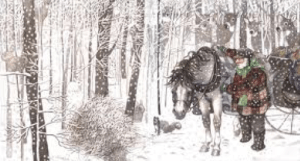
Stopping by Woods on a Snowy Evening by Robert Frost

23        Screen shot 2012-12-19 at 9.53.42 PMStopping by Woods on a Snowy Evening by Robert Frost

Whose woods these are I think I know.
His house is in the village though;
He will not see me stopping here
To watch his woods fill up with snow.

My little horse must think it queer
To stop without a farmhouse near
Between the woods and frozen lake
The darkest evening of the year.

He gives his harness bells a shake
To ask if there is some mistake.
The only other sound’s the sweep
Of easy wind and downy flake.

The woods are lovely, dark and deep.
But I have promises to keep,
And miles to go before I sleep,
And miles to go before I sleep.

Winter Begins! Winter solstice!

21        Winter Begins!  Winter solstice!

Did you ever wonder why the days are so long in the summer and so short in the winter? In the summer, around June 21 or 22, we experience the summer solstice, which is the longest day of the year. And in the winter, December 21 or 22 is the winter solstice, or shortest day.

But wait! If you live in Australia, you experience the opposite—the longest day is in December and the shortest is in June. Why?

Earth’s Angle

The answer all depends on Earth’s tilt. In the course of one year, Earth orbits around the sun. It does not complete this trip, however, with the North Pole at the top and the South Pole at the bottom because Earth is tilted. In fact, it’s tilted just about 23.5º. So at different times of the year, either the northern or the southern hemisphere is tilted toward and is therefore closer to the sun.

So if you live in the northern hemisphere (north of the equator), Earth is tilted toward the sun in the summer and away from the sun in the winter. The solstice marks the turning point, when the days begin to grow longer (in the winter) or when they begin to grow shorter (in the summer). At the solstice itself, however, the sun appears to stand still in the sky for a few days before and after. The word solstice, in fact, comes from the Latin for sun + to stand still.

Reasons for Seasons

But then why, if the solstice is the turning point, is June 21st considered the first day of summer and December 21st thefirst day of winter? This odd fact is because while the hours of daylight are changing, the oceans need to catch up. Oceans take a long time to heat up and cool down (something called thermal inertia). In June, they are still cool from the winter, so the warmest days happen in July and August. (Have you ever gone swimming off Cape Cod in June? Brrrr!) Similarly, the oceans hold onto the warmth of summer long after the barbeques have ended. So the coldest days usually happen in January and February. (Again, everything is reversed if you live below the equator.)

Even stranger, Earth is closest to the sun between January 3 and 5, but since the northern hemisphere is tilted away from the sun, the nights are long and the weather is cold.

Frostbite

18        Winter Survival- Frostbite

Frostbite

You know how your parents always tell you to wear a hat, scarf and gloves when you are outside in the cold weather? Well, you better listen, because your hands, feet, nose, ears and face are the first areas on the body to be affected by the cold weather. By keeping these parts of your body covered, you can “seal in” your body’s heat and reduce your risk of frostbite.

Frostbite is when the fluids and cells in our bodies actually freeze. This freezing can damage our blood vessels, which can block bloodflow into the area, causing lack of oxygen and tissue damage. This can become a very serious condition if you do not warm up right away.

Whether or not a person develops frostbite depends on a variety of factors, including outdoor temperature, how long you are outdoors, the humidity (or moisture) in the air, if your clothes/gloves/socks are wet or damp, wind, if sensitive parts of your body are exposed to the weather and more. If these factors are in place, frostbite can occur after being outdoors for only a few minutes! And, children are especially at risk for frostbite.

A less serious condition is minor frostbite, or frostnip, which can affect the outer layer of skin, making your fingers, toes or nose look white. As you warm up, the white will disappear and the area will remain red, sometimes for several hours.

So, what are the frostbite warning signs?:

1.) Skin will appear white, grayish-yellow or grayish-blue in color
2.) Skin will have a waxy appearance
3.) The area will have no feeling, meaning it will be numb to the touch
4.) Blisters may be present, signaling a more serious case of frostbite
5.) The skin and surrounding tissue will feel frozen, stiff or “wooden”
6.) The area(s) may swell, itch, burn or have pain, especially as you warm up

 To prevent frostnip or frostbite, or further damage after experiencing either one, follow these simple rules every time you are going to be outdoors in cold weather:

1.) Cover sensitive body parts (ears, nose, hands, toes, etc.), with appropriate clothing before heading outdoors
2.) Make sure clothing remains dry; if you get wet, change out of the clothing immediately
3.) Make sure to choose waterproof boots and coats, as well as gloves or mittens, to help lessen the chance of frostbite

4.) If you notice signs of frostnip or frostbite, tell an adult and warm up indoors – immediately. Serious cases of frostbite can land you in the hospital if not treated immediately!

Always seek medical attention for frostbite, as soon as possible, since permanent damage to affected areas can result in irreversible tissue damage or amputation, in extreme cases. In the meantime, follow these rules:

  • Opposite of what you may think, do not apply direct heat to the affected area. Instead, apply a warm (not hot) moist compress to the area and allow the body to naturally warm-up indoors.
  • Keep the frostbitten area elevated, if possible.
  • Remain indoors for a long period of time. Don’t just warm up for a half-hour then return to the cold, since this can further the damage and cause permanent injury to the areas that are affected.
  • If you suspect a case of frostbite, whether in a child or adult, seek emergency medical assistance.
  • Frostbite is a serious medical condition and should not be taken lightly, especially if your children play outdoors in cold temperatures for long periods. Check their extremities every so often to determine their condition.

Taken from http://www.lanakids.com/frstandhypthrmia.html
The Grinch Who Stole Christmas

16        How the Grinch Stole Christmas by Dr. Suess

http://www.dailymotion.com/video/xmq9i7_how-the-grinch-stole-christmas-1966_shortfilms

http://xmasfun.com/stories/Grinch/Text.asp

Every WhoScreen Shot 2012-12-15 at 1.22.20 PM
Down in Who-ville
Liked Christmas a lot…

But the Grinch,
Who lived just North of Who-ville,
Did NOT!

The Grinch hated Christmas! The whole Christmas season!
Now, please don’t ask why. No one quite knows the reason.
It could be that his head wasn’t screwed on quite right.
It could be, perhaps, that his shoes were too tight.
But I think that the most likely reason of all
May have been that his heart was two sizes too small.

But,
Whatever the reason,
His heart or his shoes,
He stood there on Christmas Eve, hating the Whos,
Staring down from his cave with a sour, Grinchy frown
At the warm lighted windows below in their town.
For he knew every Who down in Who-ville beneath
Was busy now, hanging a mistleoe wreath.

“And they’re hanging their stockings!” he snarled with a sneer.
“Tomorrow is Christmas! It’s practically here!”
Then he growled, with his grinch fingers nervously drumming,
“I MUST find a way to keep Christmas from coming!”

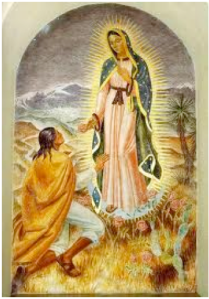
Our Lady of Guadalupe

12        Our Lady of Guadalupe

Feast Day: December 12 Screen Shot 2012-12-10 at 5.44.18 PM

We celebrate the feast of Our Lady of Guadalupe on December 9. Our Blessed Mother appeared to a fifty-five year old Indian, Juan Deigo on December 9, 1531.

Juan who had become a Catholic, was going to Mass early one morning when Our Lady stopped him as he was making his way down Tepyac Hill. Mary asked him to go to the bishop and tell him that she wanted a great church built on the very spot where she was standing.

The Indian was very troubled. He wanted with all his heart to do what the Lady commanded. But how could he approach the bishop? How could anyone believe such an unusual request?

Juan Diego went to the bishop. The bishop of course, did not believe his story. He did not want to offend Juan and told him to ask the Lady for a sign the next time he met her.

Juan was caught in the middle. The Lady knew what she wanted; the bishop had the power to make her wish come true, but he wanted proof.

On December 12, early in the morning, Juan Diego was hurrying along the path. His uncle was dying and he was going to get the priest. Juan had no time to waste and did not want to meet the lady so he took another route.

But Mary appeared again to Juan and told him that his uncle was better. In fact, Juan found out a little later that Our Lady had for a moment appeared to his uncle and he was immediately cured.

The Lady asked Juan to go back to the bishop. She wanted him to build a church. Juan remembered the bishop’s request and asked Mary for a sign. Mary sent Juan into the rocky area nearby and told him to gather the roses that were there.

Juan was confused. He knew there were no roses. It was winter, there was snow on the ground and the bushes were bare. But Juan did as he was told and there really were roses, beautiful roses. Excited, Juan picked them all and went to the bishop.

He carried them carefully in his tilma (cloak). Juan clutched his cloak and made his way into the room where the bishop was. Slowly he let down his cloak and the beautiful roses, fresh and wet with dew, fell to the floor.

Juan smiled but was shocked when the bishop and his attendants knelt down in front of him. He followed the bishop’s eyes that were staring at his cloak. And then he saw her, the picture of his beautiful lady, glowing on his tilma.

Her image was life-size, exactly as she had appeared. The bishop had received his sign and Mary would have her church.

Today a great church, called a basilica, stands on the spot where Our Lady of Guadalupe came to her people. Our Lady of Guadalupe was named patroness of Mexico and is also patroness of Latin America and the Philippines.

Taken from this site.

(By the way, all of the posts from numbered 1- 25 are part of an Advent calendar for a friend from school; most of the words are borrowed from other websites.)